01
A Neural Firework
- What do you see?
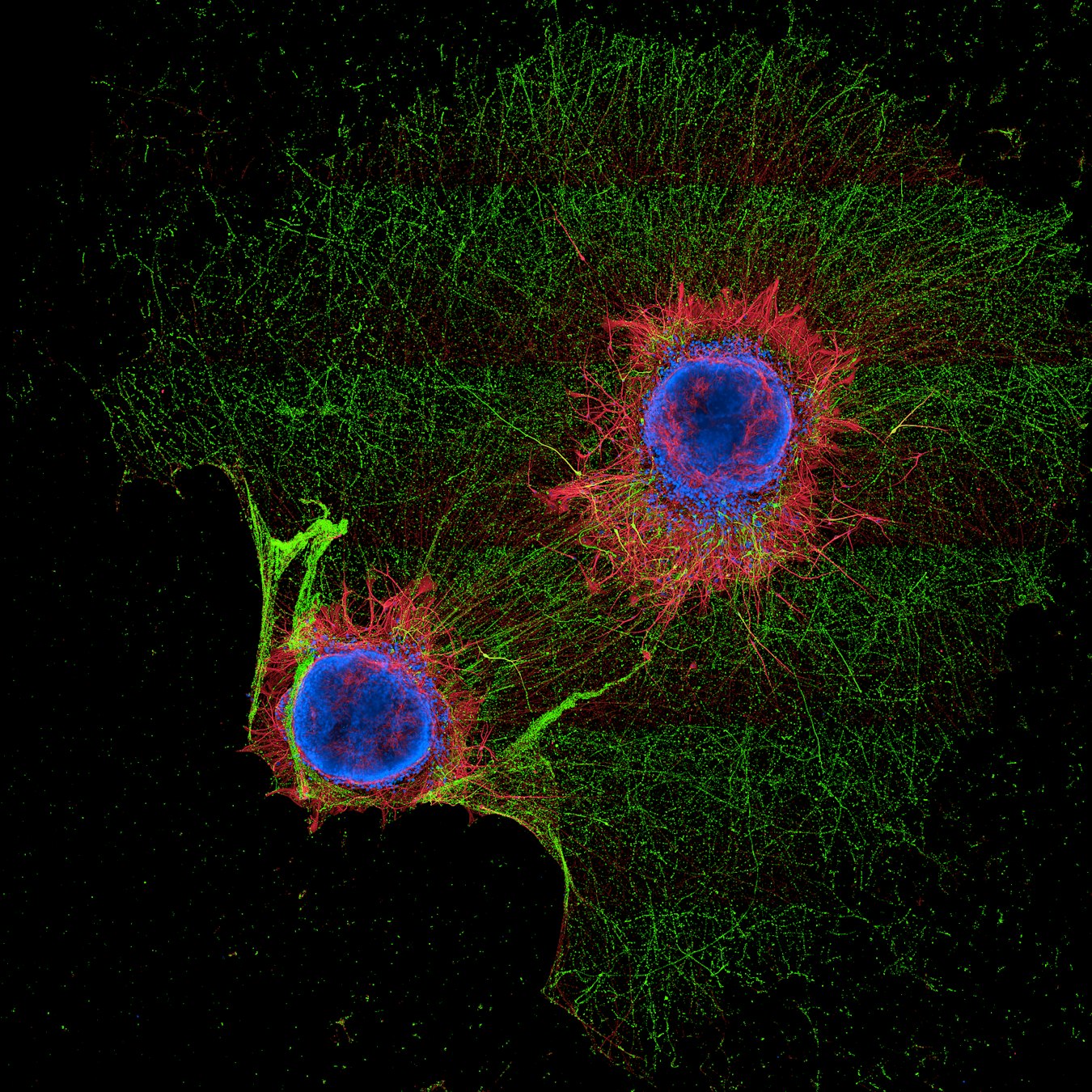
Two clusters of human sympathetic neurons extend long branches as they grow and form connections. - Blue: Cell nuclei
Green and Red: Sympathetic neurons and their branches
- Where are they found?
Sympathetic neurons extend from the spinal cord to organs throughout the human body. This image shows nerve cells grown in the laboratory which are similar to those that connect to the heart and help control its activity.
- How big are they?
These cells measure in at about 500 micrometers
≈ 6 human hairs placed side by side
- What can we learn from this image?
Sympathetic neurons don’t grow randomly. Guided by biological signals, they extend long branches and establish connections with other cells, creating communication networks throughout the body.
- What are their superpowers?
They help the body adapt to changing situations. During stress, exercise, excitement, or danger, they can make your heart beat faster, preparing your body for the "fight-or-flight" response.
- How was this image taken?
The image was taken with a high-content fluorescence microscope at 20× magnification
- Image: Eurac Research / Federica Cavion - Cellular Biologist
- What are scientists trying to understand with this image?
Scientists are studying how sympathetic neurons grow in the human body, how they form connections, and communicate with other cells. Understanding these processes could help explain how neural networks develop in health and disease.
The story behind the image
Like sparks from a firework, long branches spread out from a human stem cell-derived cluster of sympathetic neurons, searching for new cells to connect with. These growing networks eventually help coordinate vital functions throughout the body from controlling your heartbeat to how you respond to the world around you.
Credits: Eurac Research / Federica Cavion